
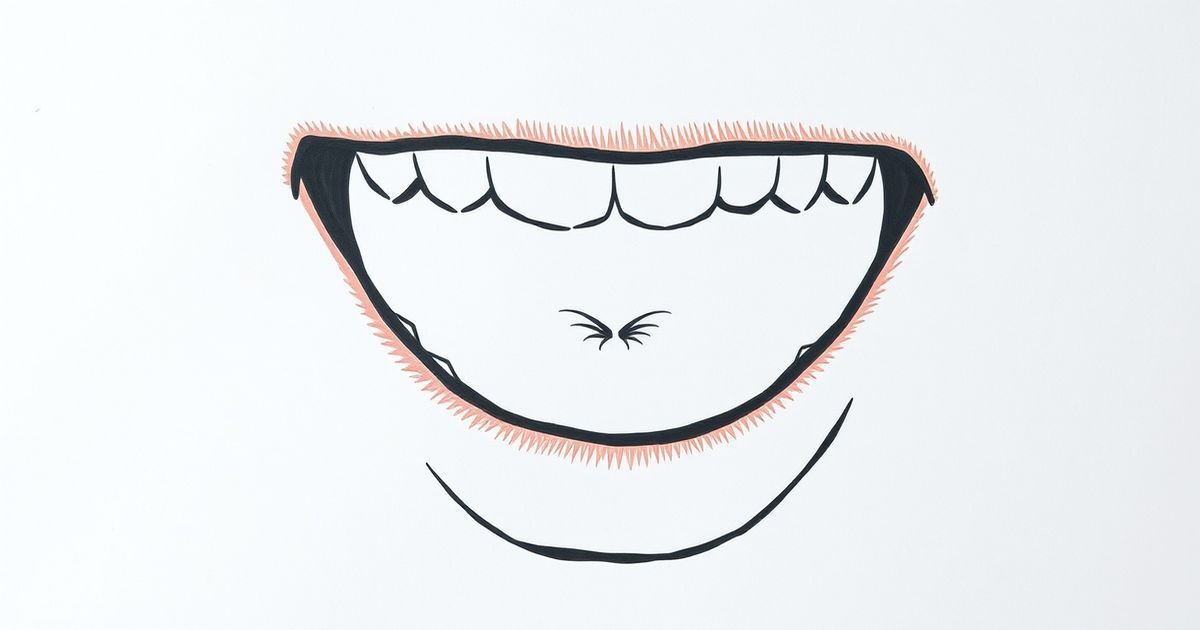
Creating compelling anime characters hinges on mastering facial expressions, and the mouth is arguably the most dynamic element. A well-executed anime mouth drawing conveys subtle emotions like shy smiles, fierce determination, or heartfelt sorrow, instantly connecting your character with the audience. Unlike realistic portraits, anime mouths often use simplified, stylized lines to amplify feelings, making them both challenging and rewarding to learn. Whether you’re a budding artist or refining your skills, understanding the nuances of anime mouth drawing transforms flat sketches into living, breathing personalities. This guide dives deep into proven methods, common pitfalls, and advanced tricks to help you draw expressive mouths with confidence. By focusing on proportion, line variation, and emotional context, you’ll unlock a new level of storytelling in your art. Ready to give your characters a voice? Let’s explore the art of anime mouth drawing.
Understanding Anime Mouth Fundamentals
Before diving into complex expressions, grasp the core principles that define anime mouths. Unlike Western cartoons, anime mouths prioritize emotional clarity over anatomical precision. They typically feature minimal lines—often just a curved stroke for a neutral expression or a few strategic curves for smiles or frowns. Key considerations include mouth width relative to the face (usually 1/3 to 1/2 the eye distance), lip thickness (often subtle, with top lips slightly thinner), and symmetry (though slight asymmetry adds realism). The jawline also plays a role; a strong jaw suggests confidence, while a softer curve implies vulnerability. According to Wikipedia, anime’s visual language evolved from post-WWII Japanese art movements, emphasizing exaggerated expressions to compensate for limited animation budgets. This historical context explains why mouths are drawn with such symbolic efficiency. For beginners, start by sketching basic shapes: a simple “U” for a neutral mouth, a wider “C” for a smile, or an inverted “U” for sadness. Remember, anime mouth drawing thrives on economy of line—every stroke must serve the emotion. Practice drawing these shapes in a mirror to internalize how real mouths move, then stylize them. This foundation prevents common errors like overly detailed lips or mismatched proportions. As you progress, study references from studios like Studio Ghibli or MAPPA to see how masters balance simplicity and expressiveness.
Step-by-Step Guide to Anime Mouth Drawing
Follow this structured approach to create dynamic mouths for any emotion. Each step builds on the last, ensuring your anime mouth drawing feels intentional and alive.
- Sketch the Jawline and Center Guide: Lightly draw the character’s jaw shape (rounded for youth, angular for maturity). Add a vertical center line from the nose base downward—this ensures symmetry. For tilted heads, angle this line accordingly.
- Define the Mouth Corners: Place small dots where the lips meet the cheeks. These anchor points determine mouth width. For a smile, position dots wider than the eyes; for a frown, bring them closer inward.
- Draw the Basic Curve: Connect the dots with a smooth curve. A neutral mouth is a gentle “U”; a smile arches upward; a frown dips downward. Keep lines light—refine later.
- Add Lip Details (Optional): For close-ups, subtly indicate the upper lip line with a shorter curve above the main mouth line. Avoid heavy outlines; use soft, tapered strokes. Lower lips are rarely drawn separately unless emphasizing fullness.
- Refine and Emphasize: Darken the final mouth line, varying pressure for depth (thicker at corners for intensity). Erase the center guide. Add subtle shading under the lower lip for dimension if needed.
- Contextualize with Eyes and Eyebrows: A mouth’s emotion is amplified by the eyes. Pair a small smile with crinkled eyes for joy, or a downturned mouth with furrowed brows for anger. Always draw these features together.
This method adapts to all expressions. For instance, a “tsundere” smirk might feature one corner slightly higher, while a crying mouth includes teardrop shapes or trembling lines. Practice drawing the same emotion across different face shapes to build versatility. For more structured practice, explore our resources featuring video demos and printable guides.
Common Mistakes in Anime Mouth Drawing (and How to Fix Them)
Even experienced artists stumble with mouths. Avoid these pitfalls to elevate your anime mouth drawing:
- Overcomplicating Lips: Anime mouths rarely show detailed lip contours. Excessive lines make expressions muddy. Fix: Use 1-2 primary curves max. Save details for extreme close-ups.
- Ignoring Facial Context: A mouth drawn in isolation often clashes with the eyes or jaw. Fix: Always sketch the entire lower face first. Ask: “Does this smile match the character’s eye shape?”
- Inconsistent Line Weight: Uniformly thick lines lack dynamism. Fix: Vary pressure—thicker at emotional focal points (e.g., smile peaks), thinner elsewhere.
- Misjudging Proportions: Mouths too wide or narrow distort the face. Fix: Measure against the eyes. A safe rule: mouth width = distance between pupils + 1/3.
- Forgetting Asymmetry: Perfect symmetry looks robotic. Fix: Slightly raise one corner for smirks or lower one side for skepticism.
These errors stem from rushing the process. Slow down: spend 70% of time on foundational shapes and 30% on details. Study real-life expressions via Britannica’s guide to facial muscles, then stylize key elements. Remember, anime mouth drawing is about suggestion, not realism. A single curved line can scream louder than a dozen detailed strokes.
Advanced Techniques for Expressive Mastery
Once basics are solid, experiment with these pro techniques to make your anime mouth drawing truly unforgettable. Start with emotional exaggeration: amplify curves beyond realism—think of a smile stretching to the ears for pure joy. Use line breaks strategically; a dotted mouth line implies whispering or uncertainty. For intense emotions like screaming, distort the jaw shape or add teeth/tongue sparingly (overuse looks comical). Shading adds depth: a soft gradient under the lower lip creates volume, while harsh shadows under the mouth suggest despair. Consider cultural nuances too—Japanese anime often uses smaller mouths for stoic characters, while Western-influenced styles may feature fuller lips. Practice “emotion swaps”: redraw a neutral mouth as angry, then sad, then surprised, using the same face template. This trains you to see how minimal changes alter perception. Advanced artists also play with perspective: a mouth in profile requires elongating the curve, while a 3/4 view needs careful corner placement. Don’t fear “ugly” expressions—a snarling mouth with bared teeth or a grimace during physical strain adds gritty realism. Finally, integrate context: a character eating might have a slightly open mouth with a visible tongue tip, while singing could feature a rounded “O” shape. These details make your art narratively rich.
Practice Strategies for Consistent Improvement
Mastery comes from deliberate, structured practice. Dedicate 15 minutes daily to mouth studies instead of sporadic long sessions. Begin with reference tracing: overlay sketches on anime screenshots to internalize line flow. Then, copy masterworks—recreate mouths from Your Lie in April (subtle sorrow) or Attack on Titan (fierce determination). Next, draw from life: photograph friends making expressions, then stylize them. Use a mirror for self-references—notice how your mouth moves during different emotions. For targeted growth, focus on one emotion per week (e.g., “Week 1: Smiles”). Document progress in a sketchbook, noting what worked. Join online communities to share work and get feedback; constructive criticism is invaluable. Remember, even pros like Hayao Miyazaki spent decades refining expressions. If you hit a plateau, revisit fundamentals—sometimes overcomplicating causes regression. Most importantly, anime mouth drawing should feel joyful. Experiment with silly expressions to loosen up! For curated exercises and community support, learn more on our site. Consistent practice transforms technical skill into intuitive artistry, letting your characters speak volumes without words.
Conclusion: Your Journey to Expressive Excellence
Mastering anime mouth drawing is a transformative step in your artistic journey, turning static characters into emotionally resonant storytellers. By understanding foundational proportions, avoiding common pitfalls, and practicing advanced techniques, you’ll create mouths that captivate viewers and convey nuanced feelings with minimal lines. Remember, the magic lies in simplicity—every curve should serve the character’s inner world. Whether you’re sketching a shy whisper or a triumphant shout, these skills empower you to infuse your art with authenticity and depth. Don’t rush the process; celebrate small victories as your confidence grows. Now, grab your pencil, revisit these steps, and let your characters’ voices shine through their expressions. Ready to take your art further? Explore our resources for in-depth tutorials, reference sheets, and a supportive community of fellow artists. Your next masterpiece awaits—start drawing today!