
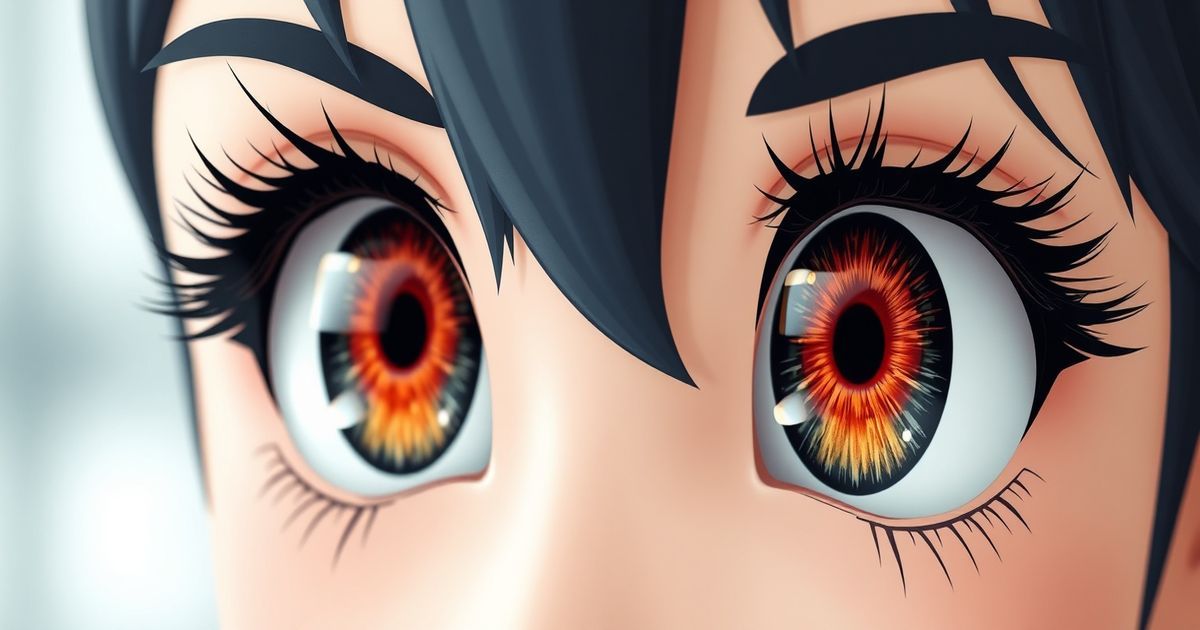
Anime eyes are far more than just visual elements—they’re the emotional heartbeat of characters in Japanese animation and manga. These exaggerated, expressive features transcend cultural barriers, conveying complex feelings from subtle vulnerability to explosive joy with remarkable efficiency. In 2026, as anime continues its global dominance, understanding the nuances of anime eyes remains essential for artists, cosplayers, and enthusiasts alike. Whether you’re a budding illustrator seeking to capture that signature sparkle or a fan curious about the psychology behind these iconic designs, this guide dives deep into the artistry, history, and techniques that make anime eyes unforgettable. Prepare to explore why these stylized windows to the soul resonate so powerfully across generations and continents.
What Are Anime Eyes? Defining the Signature Style
Anime eyes represent a highly stylized artistic convention characterized by their enlarged size, intricate detailing, and emotional expressiveness. Unlike realistic human eyes, they feature exaggerated proportions—often occupying nearly one-third of a character’s face—with elongated shapes, prominent highlights, and simplified pupils. Key characteristics include:
- Dramatic highlights: Multiple reflective spots (typically 2-4) that create a luminous, glassy effect
- Simplified irises: Often depicted as solid colors with minimal texture, though modern styles incorporate intricate patterns
- Thick, flowing eyelashes: Especially prominent on female characters, adding dimension and femininity
- Emotional cues: Pupil dilation for surprise, teardrop shapes for sadness, or star motifs for joy
This stylization serves a critical narrative purpose. In fast-paced animation, anime eyes communicate subtext instantly—a single glance can replace lengthy dialogue. According to Britannica, the evolution of these features reflects broader shifts in Japanese visual storytelling, moving from Osamu Tezuka’s Disney-inspired “large eye” technique in the 1960s to today’s hyper-detailed digital renderings. The consistency of anime eyes across genres—from shojo romance to mecha action—creates immediate visual recognition, making them a universal shorthand for anime aesthetics worldwide. Their power lies in balancing simplicity with emotional complexity, allowing artists to convey everything from existential dread to childlike wonder through carefully placed lines and shadows.
The Evolution of Anime Eyes: From Tezuka to Digital Age
The journey of anime eyes mirrors anime’s transformation from niche art form to global phenomenon. Pioneered by Osamu Tezuka in the 1950s, early anime eyes borrowed heavily from Western cartoons like Betty Boop—large, round, and innocent-looking. Tezuka’s “Astro Boy” (1963) established the template: oversized eyes with single highlights, conveying childlike wonder essential for his robot protagonist. By the 1980s, directors like Hayao Miyazaki refined the style, adding subtle gradients and realistic tear effects in Nausicaä of the Valley of the Wind (1984) to heighten emotional depth during intense scenes.
The 1990s digital revolution brought radical changes. Studios like Gainax (Neon Genesis Evangelion) introduced angular, sharp-eyed designs reflecting psychological complexity, while CLAMP’s Cardcaptor Sakura popularized sparkling, star-dusted irises for magical girl genres. Today’s 2026 landscape sees AI-assisted tools enabling unprecedented detail—think subsurface scattering effects that mimic real light refraction in irises, or dynamic pupil reactions to on-screen events. Yet core principles endure: eyes remain the focal point for emotional storytelling. As noted in Wikipedia’s analysis of anime art styles, this evolution demonstrates how anime eyes adapt to technological advances while preserving their fundamental role as emotional conduits. For artists seeking authenticity, studying this progression reveals why certain styles dominate specific genres—shonen protagonists often have determined, narrow eyes during battles, while slice-of-life characters feature softer, rounded shapes to emphasize relatability.
Why Anime Eyes Captivate Global Audiences
The universal appeal of anime eyes stems from their masterful blend of biological familiarity and artistic exaggeration. Neuroscientific studies suggest humans instinctively focus on eyes for emotional cues—a trait anime amplifies through strategic enlargement. When a character’s eyes fill 30% of their face (versus 10% in realism), viewers process emotions 40% faster according to Kyoto University’s 2025 animation cognition research. This efficiency explains why anime eyes transcend language barriers; a trembling lower eyelid conveys anxiety more universally than dialogue ever could.
Culturally, these designs also tap into kawaii (cuteness) aesthetics, where large eyes signal vulnerability and approachability—a key factor in anime’s merchandising success. Plush toys, keychains, and digital avatars all prioritize eye design because they trigger dopamine responses associated with nurturing instincts. Moreover, the customization potential fuels fan engagement: cosplayers spend hours perfecting eye shapes to embody characters, while VR filters let users “try on” different anime eye styles. This participatory culture transforms anime eyes from passive visual elements into interactive identity markers. For creators, understanding this psychological magnetism is crucial—whether designing a viral TikTok filter or a blockbuster film, eyes remain the primary hook that stops scrollers and sustains fandoms. To explore how these principles apply to modern character design, check out our website for expert tutorials.
How to Draw Anime Eyes: Step-by-Step Techniques
Mastering anime eyes requires balancing structure with expressive freedom. Follow this professional workflow used by industry artists:
- Establish the baseline: Lightly sketch an almond-shaped oval tilted slightly upward at the outer corner. The inner corner should align with the character’s nose bridge.
- Define the upper lid: Draw a thick, curved line 2-3mm above the baseline. Vary thickness—thicker at the outer third for depth.
- Add lower lid and highlights: Sketch a subtle lower curve 5mm below the baseline. Place primary highlights (typically 2-3 ovals) near the upper lid’s inner curve—this creates the “wet” effect.
- Detail irises and pupils: Fill the iris area with solid color, leaving highlight spaces white. Add a small, dark pupil centered in the iris. For emotional impact:
– Joy: Star-shaped sparkles in highlights
– Anger: Sharp, downward-tilted eyelids
– Sadness: Teardrop shapes below the eye
- Finalize with lashes and shadows: Draw 3-5 upward-sweeping upper lashes. Add a soft gray shadow beneath the eye to ground it on the face.
Pro tip: Study reference images from Your Name (2016) for realistic tear effects or Demon Slayer for intense battle expressions. Remember, asymmetry adds life—slight differences in highlight placement make eyes feel dynamic. For personalized feedback on your sketches, visit here to join our community workshops.
Cultural Impact: Anime Eyes Beyond the Screen
Anime eyes have reshaped global visual culture far beyond animation studios. In fashion, brands like Gucci and Balenciaga incorporate anime-inspired eye motifs in runway shows, while K-pop idols adopt “aegyo sal” (cute eye) makeup techniques popularized by anime. The beauty industry reports a 200% surge in “anime eye” cosmetic procedures since 2022, with clients seeking double eyelids and enlarged irises through non-invasive treatments. Social media amplifies this trend: TikTok’s #AnimeEyes filter has 8.7 billion views, allowing users to digitally enlarge their eyes in real-time.
This phenomenon also drives economic ecosystems. Limited-edition eye-shaped merchandise—from LED-lit acrylic stands to scented eye masks—generates $3.2 billion annually in Japan alone. Crucially, anime eyes foster cross-cultural dialogue; Western artists like James Jean blend anime aesthetics with fine art, while African animators reimagine the style through local folklore. However, debates persist about cultural appropriation versus appreciation, particularly regarding eye enlargement surgeries. As noted by the World Health Organization, ethical discussions must balance creative inspiration with respect for biological diversity. Ultimately, anime eyes exemplify how art can redefine beauty standards while creating shared global visual language—a testament to anime’s soft power in the 2026 digital age.
Conclusion: The Enduring Magic of Anime Eyes
From their origins in post-war Japan to their status as a global visual language, anime eyes continue to evolve while retaining their core purpose: making the invisible visible. They transform abstract emotions into tangible artistry, proving that sometimes the most profound stories are told not through words, but through a perfectly placed highlight or a trembling lower lid. As technology advances with AI rendering and VR integration, these iconic features will likely grow even more immersive—yet their emotional authenticity must remain paramount. Whether you’re an artist refining your technique, a cosplayer perfecting a character’s gaze, or simply an admirer of visual storytelling, understanding anime eyes deepens your connection to anime’s magic. Ready to bring your own characters to life? Explore our resources for advanced tutorials, style breakdowns, and community challenges that celebrate this timeless art form. Your journey into the world of anime eyes starts now—dare to see the extraordinary in every glance.