
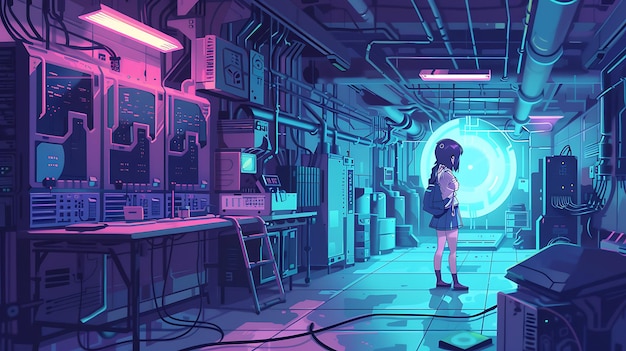
Anime technology has long captivated audiences with visions of mecha suits, neural interfaces, and full-dive virtual reality. In recent years, engineers and researchers have increasingly cited these fictional concepts as direct inspiration for real-world projects. From exoskeletons to augmented reality glasses, the line between anime and actual innovation continues to blur.
Why Japanese Audiences Embrace Anime Tech as a Cultural Mirror
In Japan, anime technology resonates deeply because it often reflects the nation’s own technological ambitions and anxieties. The 1963 series “Astro Boy” introduced a humanoid robot with artificial emotions, sparking early public interest in robotics. Decades later, Japan’s robotics labs, including those at the University of Tokyo, have openly acknowledged Astro Boy as a foundational influence. The 1995 film “Ghost in the Shell” explored cybernetic enhancements and artificial intelligence, themes that parallel Japan’s aging population and the development of assistive exoskeletons. Companies like Cyberdyne have produced robotic suits that echo the mecha designs from anime, helping elderly and disabled individuals regain mobility. This cultural feedback loop makes anime technology not just entertainment but a blueprint for societal problem-solving. Background on anime technology is documented in 11 of the Coolest Gadgets and Technology Found in Anime
Key Milestones in Anime Technology from 1963 to 2023
The timeline of anime technology begins with “Astro Boy” in 1963, which depicted a robot with human-like consciousness. In 1979, “Mobile Suit Gundam” introduced the concept of piloted mecha, influencing real-world research into large-scale robotic exoskeletons. The 1988 film “Akira” popularized cyberpunk aesthetics and psychic powers, while its depiction of a futuristic Tokyo inspired urban planning discussions. “Ghost in the Shell” (1995) pushed the boundaries of AI and neural interfaces, directly influencing the development of brain-computer interfaces. The 2007 series “Dennō Coil” foresaw augmented reality glasses years before Google Glass launched. More recently, “Sword Art Online” (2012) popularized full-dive VR, accelerating investment in immersive headset technology. In 2023, the anime “Pluto” revived debates about AI ethics and autonomous weapons, reflecting contemporary concerns about military drones and machine learning.
Comparing Anime Tech Predictions with Real Scientific Progress
Anime technology often predicts real-world innovations with surprising accuracy. The scouter devices from “Dragon Ball” (1984) functioned as portable augmented reality displays, a concept now realized in smart glasses like Microsoft HoloLens. The electromagnetic railguns in “A Certain Scientific Railgun” (2009) have real counterparts in naval weapons development by the U.S. Navy. However, some anime concepts remain far ahead of current science. The full-dive VR from “Sword Art Online” requires direct neural stimulation that is still in early experimental stages. The biomechanical mecha from “Neon Genesis Evangelion” (1995) involve organic-cyborg hybrids that challenge existing materials science. While anime technology inspires, it also sets ambitious goals that push researchers to explore new frontiers in robotics, AI, and human-machine integration.
Current Developments and What Comes Next for Anime-Inspired Tech
As of 2024, several real-world projects directly cite anime technology as inspiration. Japanese startup Meltin has developed a robotic exoskeleton inspired by “Gundam” for industrial use. Researchers at the University of Tsukuba have created a brain-computer interface that echoes “Ghost in the Shell” cyberization. The anime “Psycho-Pass” (2012) predicted AI-driven crime prediction, a concept now being tested in predictive policing systems in several countries. Looking ahead, the convergence of AI, robotics, and VR suggests that anime technology will continue to guide innovation. The ethical questions raised by “Pluto” and “Ghost in the Shell” are becoming urgent as autonomous weapons and neural implants advance. Anime technology is no longer just fiction—it is a roadmap for the future.
| Anime | Technology Depicted | Real-World Counterpart |
|---|---|---|
| Astro Boy (1963) | Humanoid robot with emotions | Social robots like ASIMO |
| Mobile Suit Gundam (1979) | Piloted mecha suits | Industrial exoskeletons |
| Ghost in the Shell (1995) | Cybernetic enhancements | Neural implants and prosthetics |
| Sword Art Online (2012) | Full-dive virtual reality | VR headsets like Meta Quest |
Frequently Asked Questions
What is anime technology best known for inspiring?
Anime technology is best known for inspiring real-world robotics, virtual reality, and augmented reality devices. Concepts like mecha suits from Gundam and neural interfaces from Ghost in the Shell have directly influenced engineers and researchers in Japan and beyond.
Why did anime become a source of real technological innovation?
Anime became a source of innovation because its creators often consulted scientists and engineers to make fictional tech plausible. This realism, combined with cultural fascination in Japan, motivated researchers to turn those visions into actual prototypes and products.
What is the most accurate prediction of anime technology?
The augmented reality glasses from Dennō Coil (2007) are among the most accurate predictions, closely resembling Google Glass and Microsoft HoloLens. The scouter devices from Dragon Ball also anticipated portable AR displays.
Where is anime technology research most active today?
Anime technology research is most active in Japan, particularly at universities like the University of Tokyo and companies like Cyberdyne. However, labs in the United States and Europe also draw inspiration from anime for VR and AI projects.
How does anime technology differ from Western sci-fi tech?
Anime technology often emphasizes human-machine integration and ethical dilemmas, while Western sci-fi tech tends to focus on hardware and space exploration. Anime also frequently portrays technology as a double-edged sword, reflecting societal anxieties about progress.